
Ideas Deserve Zero Lag: The North Star Guiding Virse Engineering
When we started building Virse, we assumed the hardest problems would be on the intelligence side: models, retrieval, creative reasoning. Those are difficult, but they weren't what threatened the product.
Instead, the real bottleneck was the canvas.
For our users, the canvas is where the work actually happens. If the canvas feels slow, inconsistent, or fragile, the rest of the stack doesn't matter. That's why we never treated performance as a layer of polish to add later—we treated it as a core product requirement from day 1.
A Performance-Oriented Interface
From the start, we optimized Virse's interface for responsiveness. We aim for the canvas to feel local—even when the system is doing intensive remote computation. Any latency regression is treated as a functional bug. If something makes the interface feel slower, that feature is considered broken until it's fixed.
We obsess over details designers rarely articulate—scroll inertia, panel timing, slider smoothness—because those micro-interactions determine whether someone stays in flow.
Rebuilding the Canvas with WebGL
Our first big decision was to move to a WebGL-based canvas.
A traditional DOM rendering pipeline would have limited us as scenes grew more complex—AI overlays, guides, large textures, and dynamic states. WebGL gives us a long-lived, GPU-accelerated surface and precise control over every draw call.
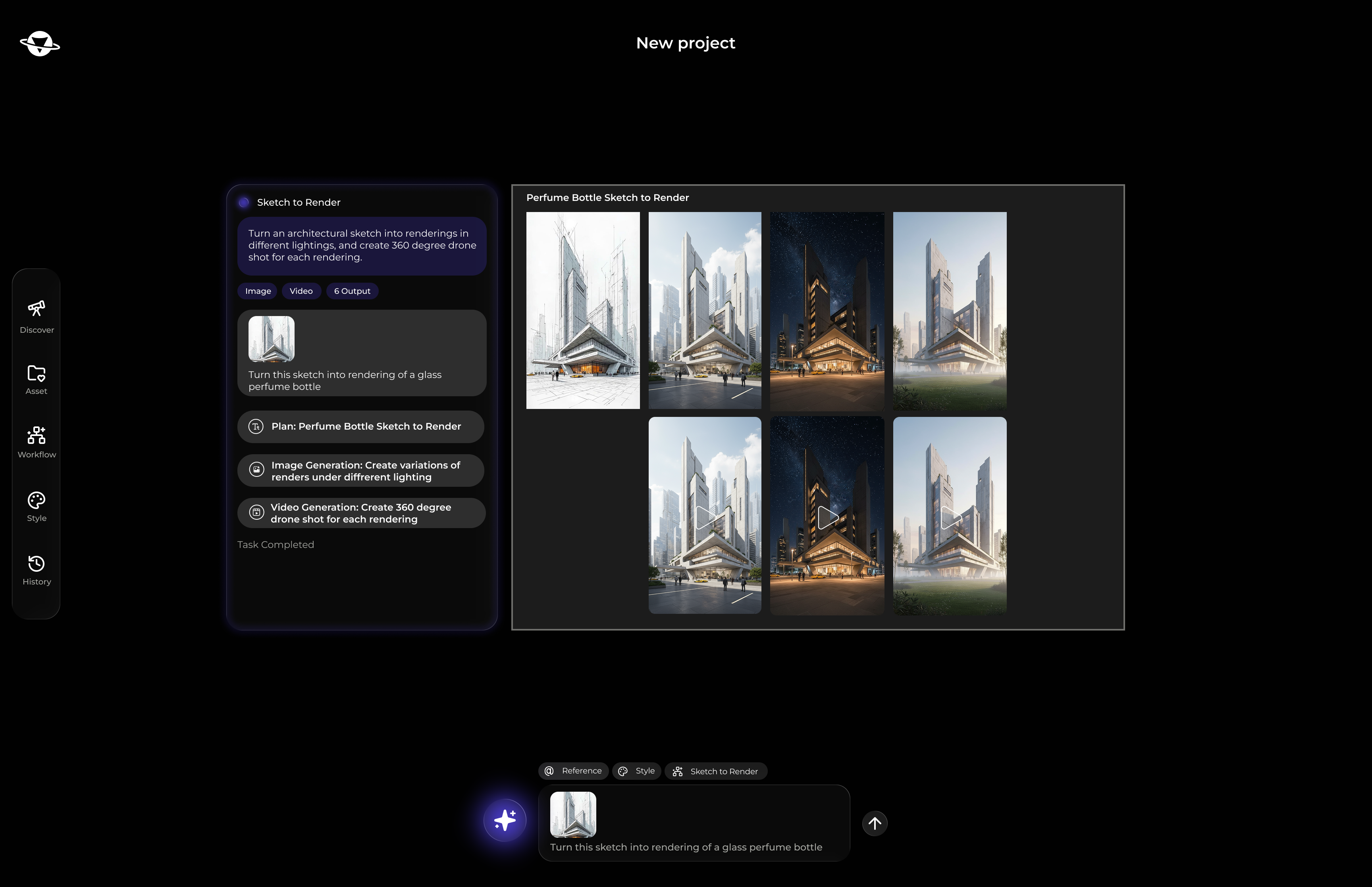
This wasn't just a "performance upgrade": It changed how we think about every interaction. It set the expectation that every surface in Virse—not just the canvas—delivers real-time feedback under heavy workloads.
Progressive Panels and Incremental Rendering
Our panel system—side panels, element inspectors, canvas chat boxes—runs on progressive rendering. We always send the most visually meaningful content first, then preload whatever keeps interactions smooth.
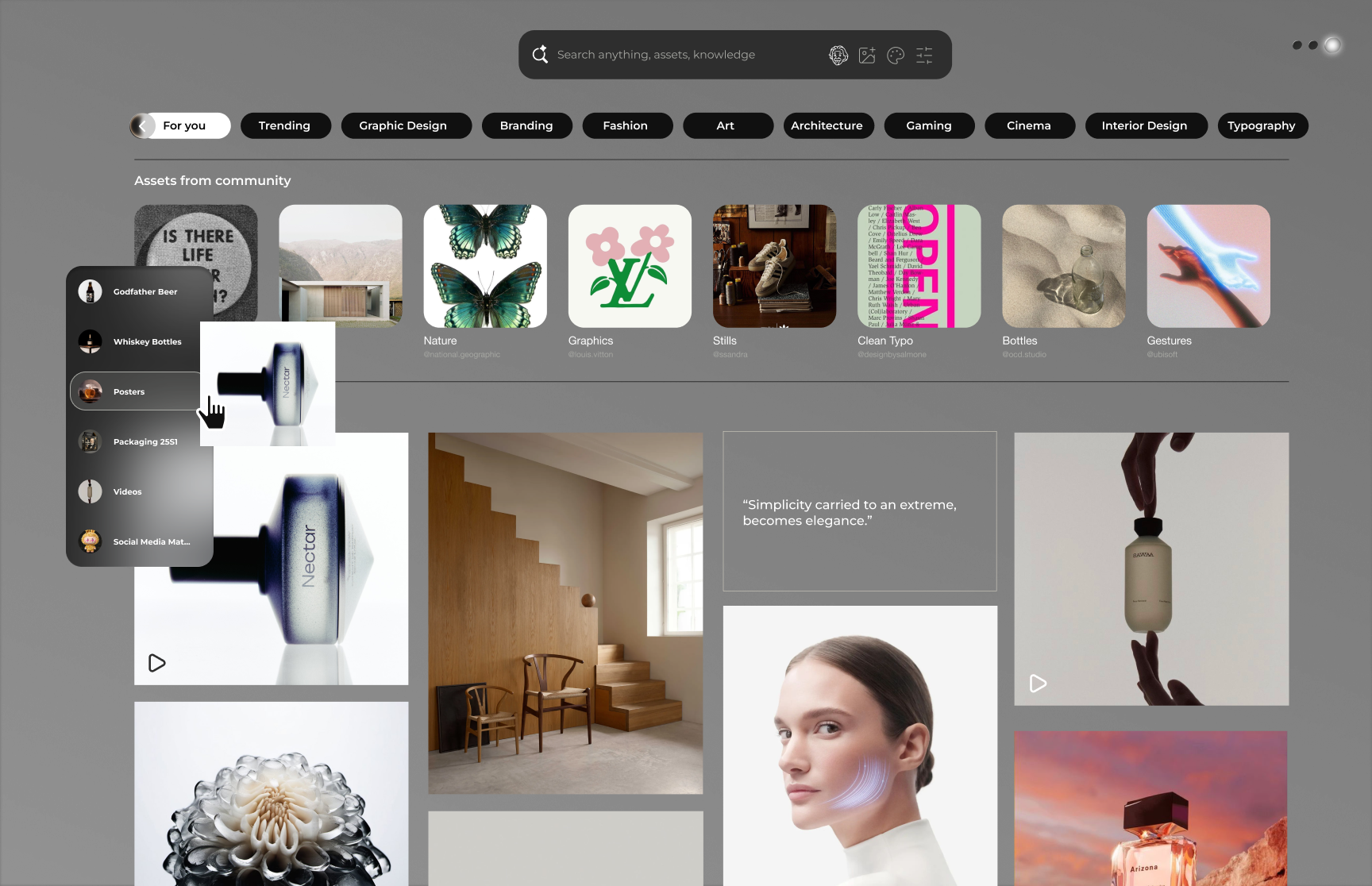
The interface stays intentionally minimal to preserve both space and compute for what matters most: images, previews, and canvas content. To support this, we partition data fetching and state updates so critical UI components never wait on non-essential work. We also memoize key render paths—especially for drags, drops, and resizes—to eliminate unnecessary re-renders and maintain responsiveness.
Baking Safety, Security, and Privacy into Virse from the First Commit
Virse was built with security at its core from the beginning. Threat modeling, penetration testing, and prompt injection vulnerability assessments started on day one.
Protecting the Confidentiality of customers' inspiration, the Integrity of their work, and the Availability of the service is elemental to everything that we do.
An intelligent system that enables harmful outcomes is unacceptable. That's why responsible use of the creative platform is one of our top priorities. The team works closely with Cybersecurity leaders from both the industry and academia on Controlled Content Generation (CCG), Safety Filtering & Abuse Detection, and Identity and Access Management (IAM).

We treated Security and Privacy not as features, but as architectural requirements from the first commit. Explicit data boundaries and rules define what can leave the client, when it can leave, and under which conditions. Sensitive operations are isolated behind narrow interfaces and designed with future adversarial scenarios in mind, not just current use cases.
Looking Forward
Building Virse feels less like building a SaaS app, but more like engineering a high-performance engine. We think in frame budgets, GPU pipelines, cross-browser quirks, and micro-interaction fidelity. We ship only what preserves immediacy.
That's the standard we hold ourselves to: zero lag in how ideas move, and zero friction in how Virse understands taste, style, and intent.
— The Virse Team